
Collision or accident in Poland: driver's duties, police and insurance
After a minor collision with no one injured, the driver's duties fit into the four points of art. 44 of the Road Traffic Act, and the police are not required. When someone is injured the list grows: help, calling the emergency services, no moving the vehicle and no alcohol until you are tested. Below are both procedures step by step, the data for the driver's statement, duties towards the insurer, recourse and penalties.
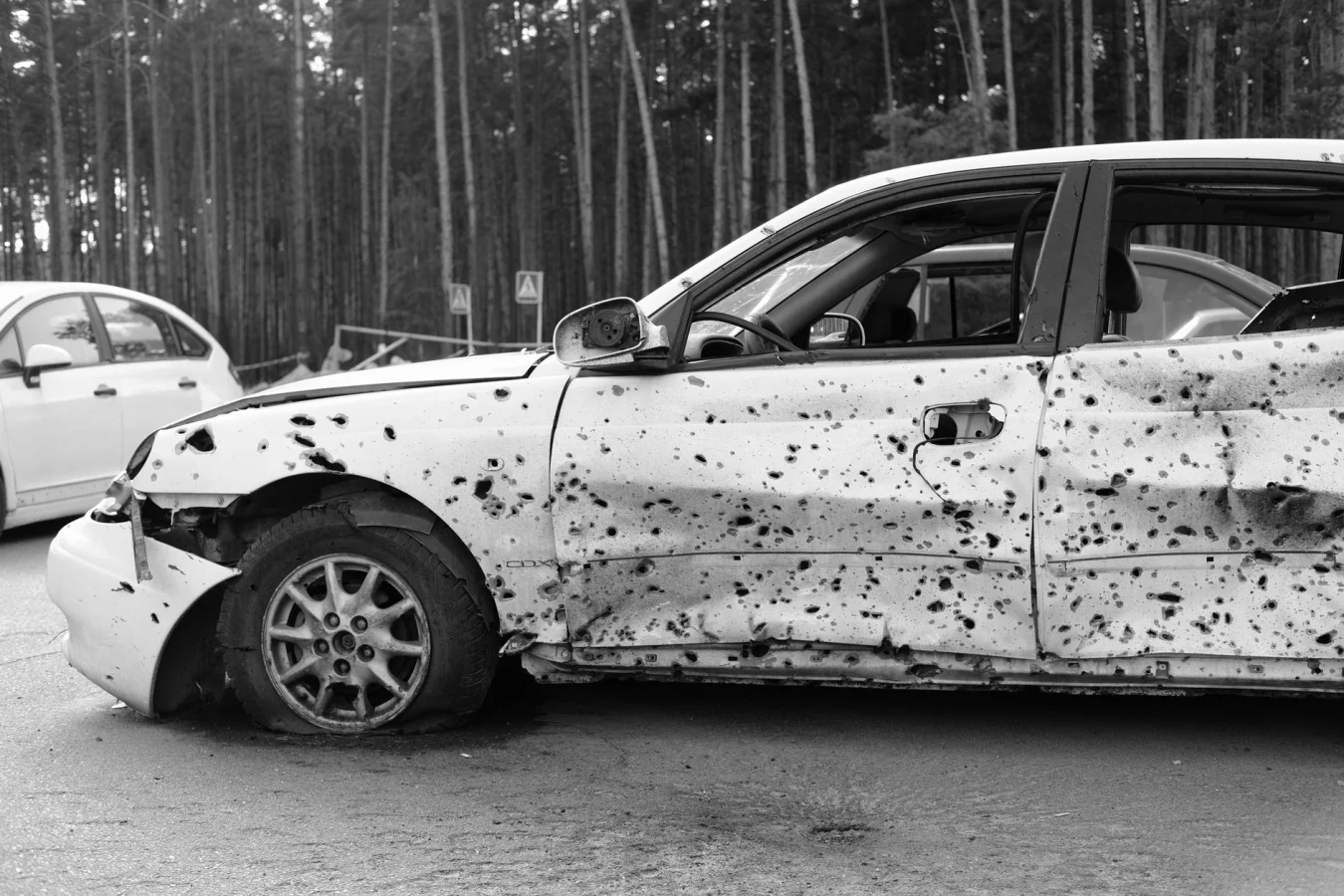
Photo: Vladyslav Huivyk / Pexels
This guide covers the Polish driving licence and the rules that apply in Poland. Legal status checked on 12 September 2026.
After a collision with no one injured, stop, secure the scene, move the car off the road and exchange details with the other driver; calling the police is not compulsory. If someone is injured or killed, help the injured, call 112, stay put, do not move the vehicle and do not drink alcohol until the police arrive.
Collision or accident: where the difference comes from
The Road Traffic Act (Prawo o ruchu drogowym) does not define a collision and an accident separately. Art. 44(1) lists the duties of every driver involved in a road accident, and para. 2 adds further ones when someone is killed or injured. Drivers, police officers and insurers call an event with no casualties a collision, and an event with someone injured or killed an accident. That is how we write below, but it is a practical division, not a statutory one.
Everything depends on the outcome. It decides whether you may move the car, whether you must call the police and whether you face a criminal case. So the first question after a crash is: is anyone injured?
| What you do | No one injured or killed (collision) | Someone injured or killed (accident) |
|---|---|---|
| Stopping the vehicle | yes, without creating a hazard | yes, without creating a hazard |
| Securing the scene | yes | yes |
| Moving the vehicle off the road | without delay, it is a duty | forbidden, the vehicle stays until the police arrive |
| Calling the police | not compulsory | compulsory, together with the emergency medical services |
| Giving your details | at the request of another participant | at the request of another participant |
| Alcohol after the event | driving ban as always | additionally no drinking until the police arrive and test you |
| Staying at the scene | until you complete the duties in para. 1 | a duty, and after calling for help you must come back |
What to do after a collision with no one injured: four duties under art. 44(1)
The list in art. 44(1) of the Road Traffic Act is short and applies to every driver who took part in the event:
- Stop the vehicle without creating a hazard to road traffic.
- Ensure traffic safety at the scene.
- Move the vehicle from the scene without delay so that it does not block traffic. Since no one has been hurt, you do not wait for the police. The catalogue tests this directly: question 6297 on moving the vehicle from the scene has the answer YES, and question 6469 the answer C.
- At the request of another participant, give your details, the details of the owner or keeper of the vehicle and the details of the OC insurer (OC is the compulsory third-party liability insurance, ubezpieczenie odpowiedzialności cywilnej). Questions 6299, 6310 and 6311 have the answer YES.
The Act does not list the actions that make up securing the scene. The fines tariff does, however, penalise failing to signal a vehicle stopped after an accident: 300 zł (PLN) on a motorway or expressway (there the duty always applies), 150 zł on another road when you are standing on the carriageway in a prohibited place or on the hard shoulder and not visible from a sufficient distance (art. 50(1)). In practice, and this is advice rather than a rule: switch on the hazard lights, put on a hi-vis vest before you step onto the carriageway, and photograph the position of the vehicles before you move them. How to light a stationary vehicle after dark is described in our article on car lights and when to switch them on.
For failing to move the vehicle from the scene of an event with no one killed or injured, the tariff provides 150 zł (entry 70).
What to do when someone is injured: help, 112 and no moving the vehicle
When someone is killed or injured, the duties in para. 1 are joined by those in art. 44(2):
- Give the injured the necessary help.
- Call the emergency medical services and the Police. You dial the emergency number 112. Question 6404 in the catalogue has the answer C.
- Do not move the vehicle from the scene. Question 6294 has the answer NO, and 6409 the answer A.
- Do not do anything that would make it harder to establish what happened (question 7241: not allowed).
- Stay at the scene. If you left to call for help, come back. The catalogue asks about this three times: 6292 NO, 6461 C, 2420 NO.
- Until the police arrive and test you, do not drink alcohol or take similarly acting substances (point 2a).
The same duties apply accordingly to the other participants in the event (para. 3). The effects of the crash itself are limited by belts, airbags and head restraints, which we write about in our article on safety systems in a car, but helping the injured until the paramedics arrive is your responsibility.
When the police are compulsory, and when it is worth calling them anyway
The duty to call the Police comes from two acts. The Road Traffic Act requires it when someone is killed or injured (art. 44(2)). The Act on Compulsory Insurance (ustawa o ubezpieczeniach obowiązkowych), art. 16(1), requires a participant in an event covered by OC to notify the Police without delay when there are human casualties or the circumstances suggest a crime. For an ordinary bump the police are not compulsory: question 6296 in the catalogue has the answer NO.
When should you call a patrol anyway? This is advice, not a rule:
- the other driver refuses to give their details or wants to drive off;
- you suspect they are under the influence of alcohol (drink-driving is an offence or a crime; the per mille thresholds are described in our article on drink-driving, limits and penalties);
- you disagree about who was at fault;
- the damaged property belongs to someone who is not at the scene, for example a parked car.
The driver's statement after a collision: what details to write down
The Act does not impose a template for the statement. The scope of the data follows from two provisions: art. 44(1)(4) of the Road Traffic Act (details of the driver, the owner or keeper of the vehicle and the OC insurer) and art. 16(2) of the Act on Compulsory Insurance (data identifying the insurer and the OC policy of the party at fault).
In practice you write down:
- the details of both drivers and of the owners or keepers of the vehicles;
- the vehicle details, including registration numbers;
- the OC insurer of each vehicle and the policy number;
- the date, time and place of the event;
- a description of what happened, stating who caused the collision;
- a sketch of the situation: road layout, directions of travel, point of impact;
- the signatures of both parties.
The description and sketch are a matter of practice, not a statutory requirement, but the insurer uses them to establish liability.
Duties towards the insurer and what happens if you skip them
Art. 16(1) of the Act on Compulsory Insurance places four duties on a participant in the event: ensure safety at the scene, mitigate the effects, prevent the damage from increasing, and notify the Police in the situations described above. Every participant covered by OC (not only the party at fault) additionally (para. 2) gives the others the details of their insurer and policy, and notifies their own insurer of the event without delay.
What if you do not? Art. 17 of that Act says that if the failure to perform these duties was intentional or grossly negligent and affected the determination of liability or the extent of the damage, the insurance company may reduce the compensation or demand repayment of part of it. The burden of proof rests with the company, not with you.
Recourse: when the insurer will claim the money back from you
OC pays the injured party, but in several situations the insurer may later demand that the driver repay the compensation paid out. This is recourse under art. 43 of the Act on Compulsory Insurance. It applies to a driver who:
- caused the damage intentionally;
- drove after consuming alcohol, in a state of intoxication or under the influence of drugs;
- came into possession of the vehicle through a crime;
- did not hold the required driving entitlement (except when saving human life or property, or in a pursuit);
- fled the scene.
Point 5 explains why driving away from a bump without giving your details is a bad idea even when the damage is minor. Point 4 also covers a driver whose entitlement has been withdrawn, for example after exceeding the points limit; how that happens is described in our article on penalty points and losing your licence.
Criminal liability, fines and points
The Criminal Code (Kodeks karny) comes into play when someone is injured or when you fail to give help. Causing an accident in which another person suffered injuries impairing bodily functions for more than 7 days carries a prison sentence of up to 3 years (art. 177 para. 1). When the result is death or serious harm to health, the penalty is harsher (para. 2). Failing to help a person in a situation of immediate danger of losing their life or of serious harm to health, when help can be given without exposing yourself or another person to danger, is also up to 3 years (art. 162 para. 1). No crime is committed by someone who does not give help that would require them to undergo a medical procedure themselves, or when immediate help from an institution or person appointed for that purpose is available (para. 2). A perpetrator of an accident under art. 177 para. 1 who fled the scene, was intoxicated or drank after the accident but before being tested receives a penalty from the lower limit increased by half to the upper limit increased by half (art. 178 para. 1); in the case of death or serious harm to health, the court sentences even more severely (art. 178 para. 1a).
Fines for the collision itself are small. The tariff (as of September 2026) provides:
| Offence | Fine |
|---|---|
| Failing to move the vehicle from the scene of an event with no one killed or injured (entry 70) | 150 zł |
| Failing to signal a vehicle stopped after an accident on a motorway or expressway (entry 159) | 300 zł |
| Failing to signal a stop after an accident on another road, when you are standing on the carriageway in a prohibited place or not visible on the hard shoulder (entry 181) | 150 zł |
Penalty points: failing to help accident victims is 15 points (code A 04 in the regulation on the register of drivers who breach road traffic rules, in force since 3 June 2026).
Catalogue questions on collisions and accidents: cheat sheet with answers
The answers follow directly from art. 44:
| Number | What it asks | Answer |
|---|---|---|
| 6297 | moving the vehicle from the scene when no one is killed or injured | YES |
| 6469 | the same issue in the A/B/C version | C |
| 6299, 6310, 6311 | giving, at the request of another participant, your details, the vehicle owner's details and the insurer's details | YES |
| 6296 | whether the Police must be called when no one is killed or injured | NO |
| 6404 | whom to call when someone is injured | C |
| 7241 | actions that make it harder to establish the course of the accident | not allowed |
| 6292, 2420 | leaving the scene of an accident with injured people | NO |
| 6461 | staying at the scene of an accident in the A/B/C version | C |
| 6294 | moving the vehicle from the scene of an accident with injured people | NO |
| 6409 | the same issue in the A/B/C version | A |
The same block of the catalogue also contains questions 3670, 3672, 3675, 6298, 6315 and 3007. You can practise them all on the list of category B exam questions.
There is one exam trap: questions about moving the vehicle have two opposite answers depending on whether the word "injured" appears in the text. With no one injured you move it (YES), with injured people you leave it (NO). A practical tip for the road: keep a pen and paper in the glovebox and your OC policy number on your phone; after a bump, check the people first and only then the cars.
Frequently asked questions
Do you have to call the police after a minor collision with no one injured?
No. Art. 44(2) of the Road Traffic Act requires calling the Police when someone is killed or injured, and the Act on Compulsory Insurance also when the circumstances suggest a crime. For an ordinary collision, exchanging details and a written statement is enough.
Can I move my car after a collision?
If no one is injured or killed, you have a duty to move the vehicle from the scene without delay, and leaving it there carries a 150 zł fine. When there are injured people, the vehicle stays where it is until the police arrive.
What happens if you drive away from the scene of a collision?
The insurer will pay compensation to the injured party and may then demand that you repay it under art. 43 of the Act on Compulsory Insurance. In an accident with injured people, fleeing the scene additionally increases the penalty under the Criminal Code (art. 178).
Can I have a drink to calm my nerves after an accident?
No. Until the police arrive and test you, you must not drink alcohol or take similarly acting substances. Drinking after an accident but before the test is treated by the court just as severely as being intoxicated at the time of the event.
How long do I have to report a collision to the insurer?
The Act says that every participant covered by OC notifies their insurer without delay, with no number of days given. An intentional or grossly negligent delay that affects the determination of liability or the extent of the damage allows the company to reduce the compensation or demand repayment of part of it.
Is there an official template for the driver's statement after a collision?
There is none. The rules only indicate the scope of the data: the driver, the owner or keeper of the vehicle, the OC insurer and the policy. The description of events, sketch, date, place and signatures of both parties are practice that makes settling the claim easier.
Which number should I call after an accident?
The emergency number 112. When someone is injured or killed you have a duty to call the emergency medical services and the Police, and before that to give the necessary help.
Related exam questions
- 6297If you're involved in a car accident in which there are no injuries or fatalities, are you obliged to immediately remove your car from the scene of the accident?
- 6469Which of the following actions apply to drivers involved in a motor vehicle accident in which there are no fatalities or victims?
- 6299If you're involved in a car accident, are you obliged to provide your personal details at the request of the second party involved in the same accident?
- 6310If you're involved in a car accident, are you obliged to provide the details of the car owner at the request of another person involved in such accident?
- 6311If you're involved in a car accident, are you obliged to provide the details concerning motor third-party liability insurance at the request of another person involved in the accident?
- 6296If you're involved in a car accident in which there are no injuries or fatalities, are you obliged to call the Police?
- 6404What are responsibilities of the person involved in the traffic accident in which there are victims?
- 7241You have participated in a car accident with casualties. Are you allowed to undertake actions which might hinder establishing the course of the accident?
- 6292If you're involved in a car accident in which there are injured persons, can you leave the scene of the accident once the ambulance service has been called?
- 6461Which of the following actions apply to drivers involved in a motor vehicle accident in which there are fatalities or victims?
- 2420Are you allowed to leave the scene of the accident because you believe that the perpetrator of the accident will give first aid to the injured person?
- 6294If you're involved in a car accident in which there are injured parties, can you remove your car from the scene of the accident so that it does not create an obstacle to traffic?
- 6409What must you not do if you're involved in an accident where there are fatalities?
- 3670When driving a vehicle involved in a road accident in which people are injured, are you obliged to remove the vehicle from the scene of the accident not to obstruct the traffic?
- 3672You have participated in a road accident in which people got injured. Are you obliged to remain at the scene of the accident?
- 3675As a vehicle driver involved in a road accident, in which a person got killed, are you obliged to remain at the scene of the accident?
- 6298If you're involved in a car accident in which there are injured parties, are you obliged to call the emergency service and provide the necessary assistance to the victims?
- 6315Once you reach an accident spot, can you secure such a spot by appropriately positioning your car and turning on your emergency lights?
- 3007In this situation, are you obliged to ensure traffic safety at the scene of the accident?
Sources
- Ustawa z dnia 20 czerwca 1997 r. Prawo o ruchu drogowym (tekst jednolity Dz.U. 2024 poz. 1251) , Dziennik Ustaw (2024-08)
- Ustawa z dnia 22 maja 2003 r. o ubezpieczeniach obowiązkowych, Ubezpieczeniowym Funduszu Gwarancyjnym i Polskim Biurze Ubezpieczycieli Komunikacyjnych (tekst jednolity Dz.U. 2026 poz. 783) , Dziennik Ustaw (2026-06)
- Ustawa z dnia 6 czerwca 1997 r. Kodeks karny (tekst jednolity Dz.U. 2025 poz. 383) , Dziennik Ustaw (2025-03)
- Rozporządzenie Prezesa Rady Ministrów z dnia 30 grudnia 2021 r. zmieniające rozporządzenie w sprawie wysokości grzywien nakładanych w drodze mandatów karnych (taryfikator, Dz.U. 2021 poz. 2484) , Dziennik Ustaw (2021-12)
- Rozporządzenie Ministra Spraw Wewnętrznych i Administracji z dnia 29 maja 2026 r. w sprawie ewidencji kierujących pojazdami naruszających przepisy ruchu drogowego (Dz.U. 2026 poz. 724) , ELI (eli.gov.pl) (2026-06)