
At what point, while driving a passenger car, will you press the clutch pedal if you want to routinely (intentionally) brake when you're travelling at high speed?
Show the correct answer
Correct answer
C. When the speed drops to the minimum speed for the gear I'm going in.
Explanation
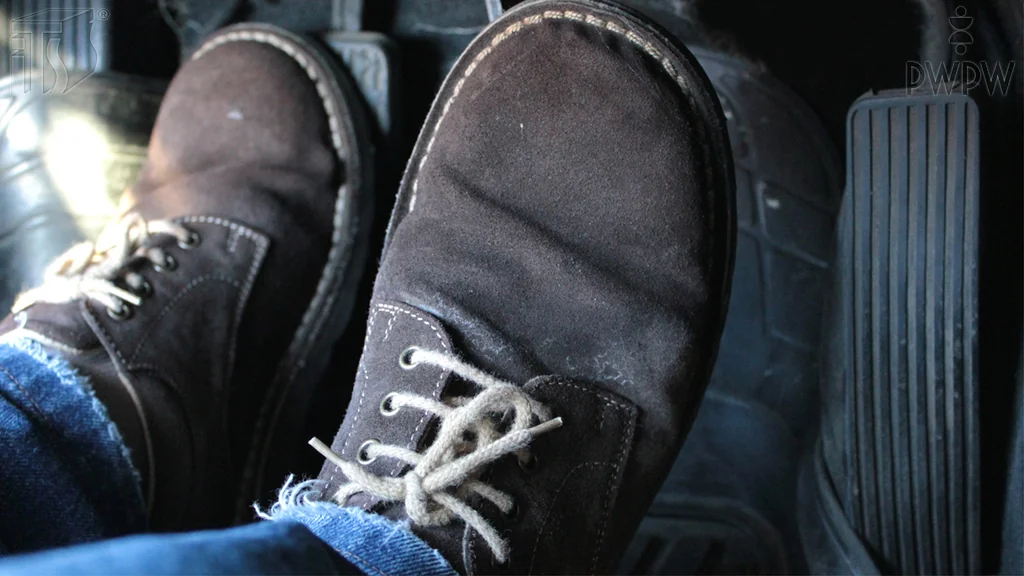
In the photo you can see the driver's feet on the pedals: the left one above the clutch, the right one above the brake, and the accelerator next to them. When you are driving at high speed and plan to brake, you press the clutch only when the speed drops to the minimum for the gear you are in - answer C. Pressing the clutch before the brake (A) or together with it (B) disconnects the engine from the wheels and takes away engine braking.
With the clutch pressed, the car rolls on its momentum, so only the brakes are braking, and they overheat more easily; with a gear engaged, the engine also reduces speed and stabilises the car, especially on a slippery road. The Road Traffic Act requires you to brake in a way that does not cause danger and to drive at a speed that allows you to keep control of the vehicle. So you brake in gear, and when the revs drop to around idling speed and the engine starts to judder, you press the clutch and change down or stop. The exception is emergency braking to a standstill - then you press the clutch just before stopping so as not to stall the engine.
Legal basis: Art. 19 para. 1 and para. 2 point 2 of the Road Traffic Act (Prawo o ruchu drogowym)