
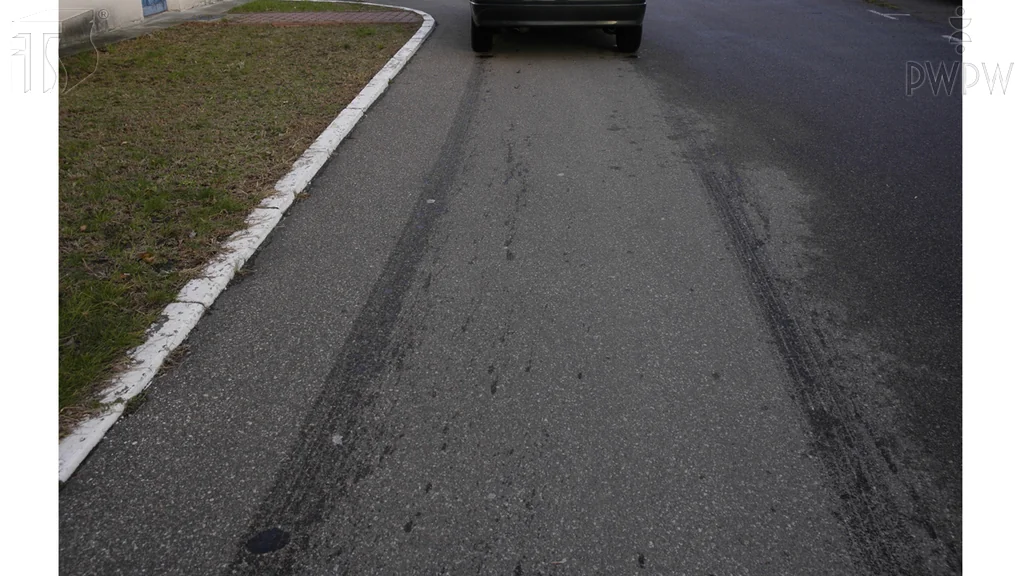
Approximately, by how much does the braking distance increase if speed is doubled?
Show the correct answer
Correct answer
A. Four times.
Explanation
Braking distance increases with the square of speed. The energy of a moving car depends on its speed squared, and the brakes must get rid of this energy - twice the speed means four times as much energy and approximately four times the braking distance. The correct answer is A.
Example: at 50 km/h, the braking distance on a dry surface is about 14 m, and at 100 km/h it is already about 56 m. On top of this comes the distance travelled during the driver's reaction time, which increases in proportion to speed. That is why the Road Traffic Act requires you to drive at a speed that allows you to keep control of the vehicle, taking into account the conditions in which traffic is moving. Doubling your speed does not mean "I will need twice as far to stop" - it means four times longer braking.
Legal basis: Art. 19 para. 1 of the Road Traffic Act (Prawo o ruchu drogowym)