
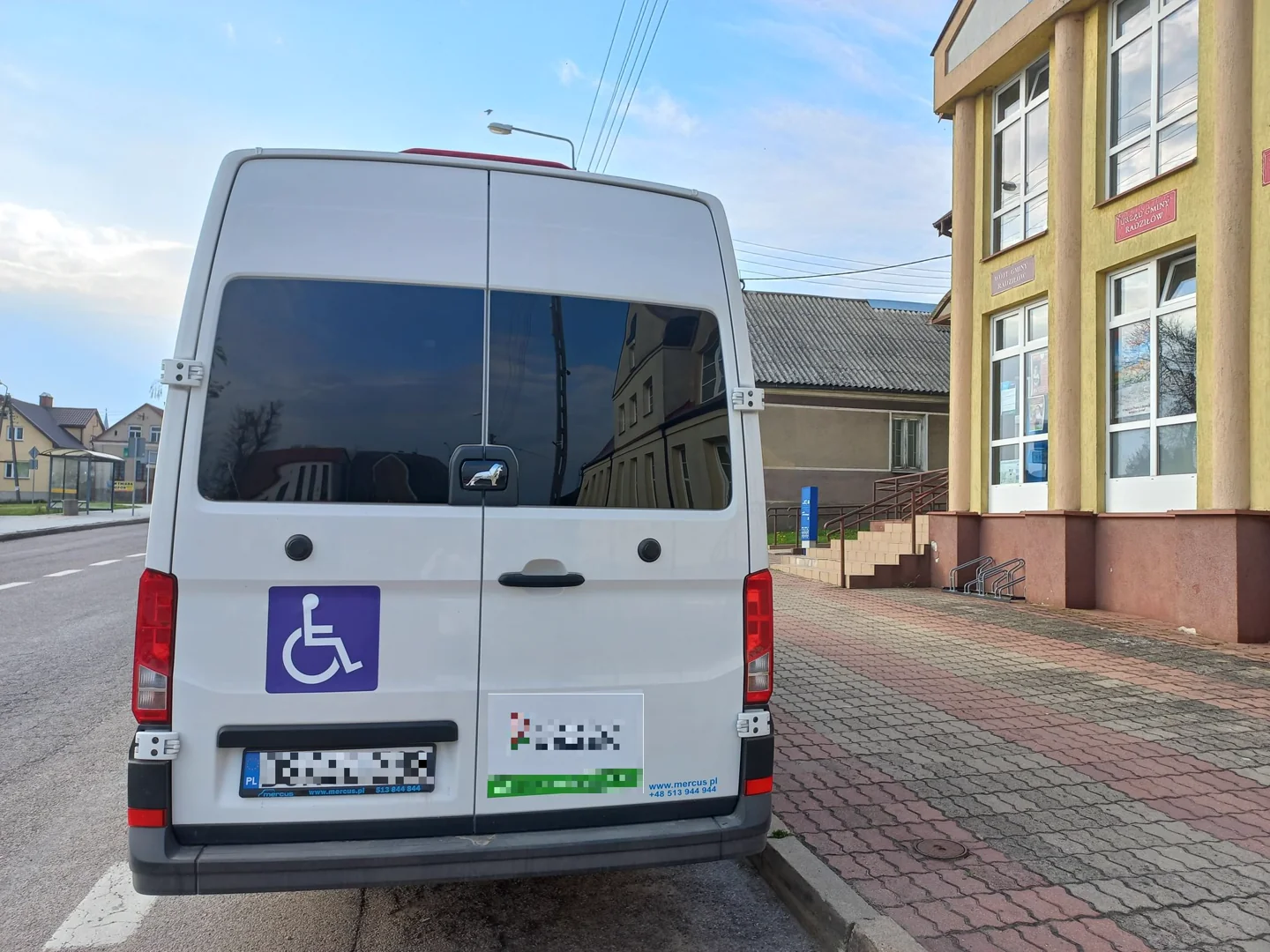
Are you obliged to exercise extreme caution when passing a vehicle marked at the front and rear with a visible blue plate and activated hazard lights when a disabled person is boarding or alighting?
Show the correct answer
Correct answer
YES
Explanation
In the photo a white minibus is standing in front of you, with a blue plate with a white wheelchair symbol on its rear doors - a vehicle designed to carry persons with disabilities. When passing such a vehicle with its hazard warning lights on, you are obliged to exercise particular caution while a person with a disability is getting in or out. The answer is: yes.
The Road Traffic Act states that a vehicle designed and built to carry persons with disabilities is marked at the front and rear with blue plates with the international wheelchair symbol in white, and its driver is obliged to switch on the hazard warning lights while a person with a disability is getting in or out. On the other hand, a driver passing such a vehicle is obliged to exercise particular caution while a person with a disability is getting in or out, and to stop if necessary. So flashing hazard warning lights next to a blue plate are a signal: someone is getting out right now, possibly in a wheelchair, down a ramp extended from the rear or side, and needs space and time. You slow down, pass with a wide gap, and if the ramp or wheelchair takes up part of the roadway, you stop and wait.
Legal basis: Art. 58 para. 1 and 2 of the Road Traffic Act (Prawo o ruchu drogowym)