
Are you allowed to drive a vehicle if the presence of alcohol in your breath exceeds 0.1 mg/dm³?
Show the correct answer
Correct answer
NO
Explanation
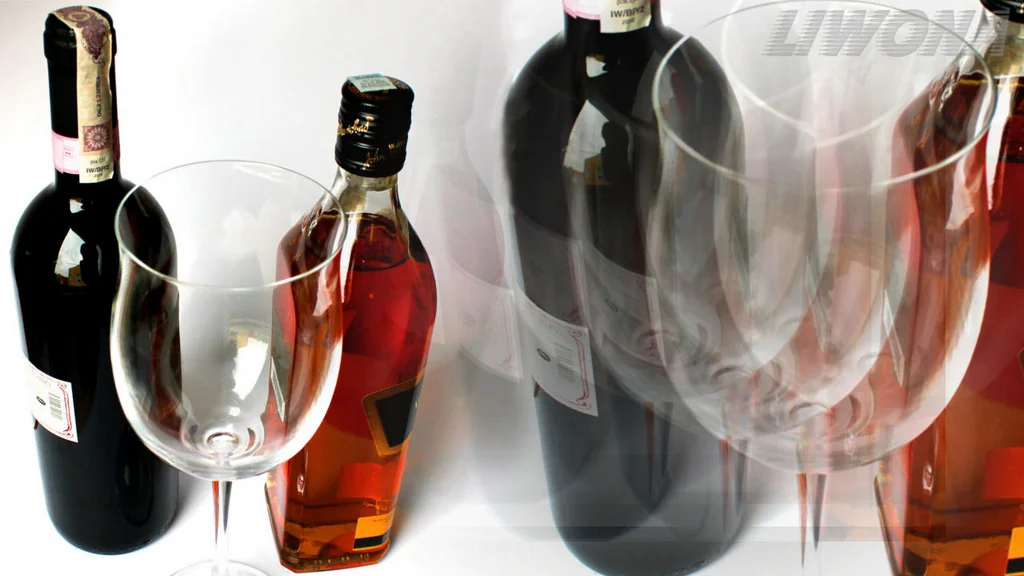
The photo shows bottles of wine and whisky and glasses. You are not allowed to drive a vehicle when the alcohol content in your exhaled breath exceeds 0.1 mg per 1 dm3 - this is already the state after drinking alcohol, and driving in this state is prohibited. The answer is: no.
The Road Traffic Act prohibits a person from driving a vehicle when intoxicated, after drinking alcohol or after taking a substance that acts similarly to alcohol. The limits are set by the Act on Upbringing in Sobriety and Counteracting Alcoholism: the state after drinking alcohol exists when the alcohol content in exhaled breath is from 0.1 to 0.25 mg per 1 dm3 (from 0.2 to 0.5 per mille in the blood), and intoxication - when it exceeds 0.25 mg per 1 dm3 (0.5 per mille). Driving after drinking alcohol is a petty offence punishable by detention or a fine and a driving ban, and driving while intoxicated is a crime. Alcohol makes your reaction time longer even at the lowest concentrations, so the only safe rule is: if you have been drinking, you do not drive - and after an evening party you check yourself with a breathalyser in the morning, because the body burns only about 0.1-0.15 per mille per hour.
Legal basis: Art. 45 para. 1 point 1 of the Road Traffic Act (Prawo o ruchu drogowym); Art. 46 para. 2 and 3 of the Act on Upbringing in Sobriety and Counteracting Alcoholism; Art. 87 § 1 of the Code of Petty Offences; Art. 178a § 1 of the Criminal Code