
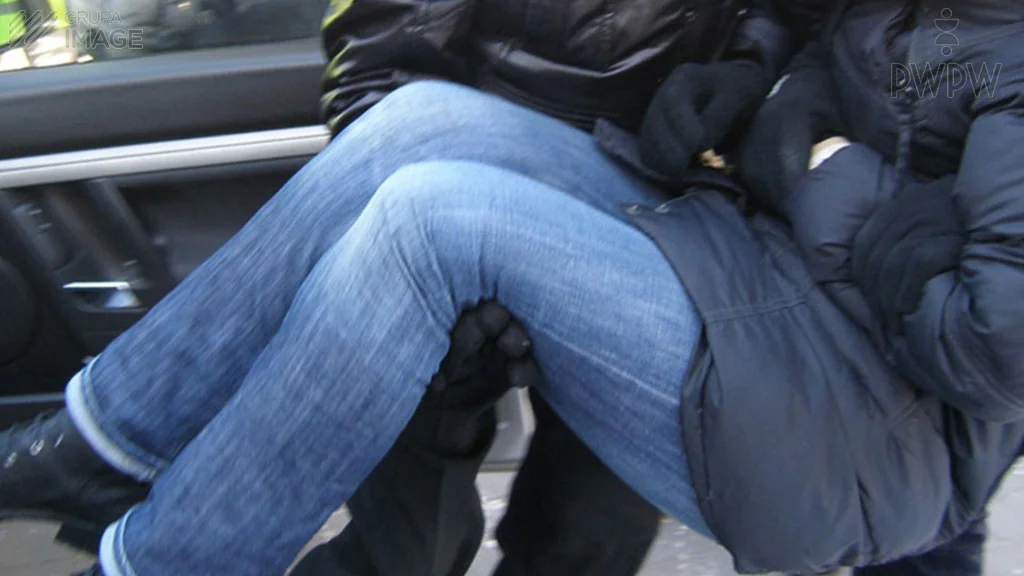
In which of the following situation should you resolve to removing a casualty out of the crashed vehicle before the arrival of emergency serves, if you have reasons to believe that he has suffered a spine injury?
Show the correct answer
Correct answer
B. When there is threat to life of the injured person.
Explanation
In the photo a man is carrying a casualty in his arms next to the open door of a car. You get a casualty with a suspected spinal injury out of the vehicle before the services arrive only when there is a threat to their life - answer B.
Every movement, bending or twisting of the body with a damaged spine can damage the spinal cord and cause permanent paralysis. That is why you leave in the vehicle a casualty who is breathing and is not in any immediate danger, stabilise their head in the position in which you found it, and wait for the rescuers with the right equipment. You pull them out only when there is a real threat to life: a fire, a risk of explosion, no breathing requiring resuscitation, or the danger of being hit by another vehicle. A demand from the casualty (answer A) or from their family (answer C) does not change the risk assessment - a person in shock does not know whether their spine is damaged. The Road Traffic Act requires you to give the necessary help, not to expose the casualty to additional injuries.
Legal basis: Art. 44 para. 2 point 1 of the Road Traffic Act (Prawo o ruchu drogowym); Art. 162 § 1 of the Criminal Code