
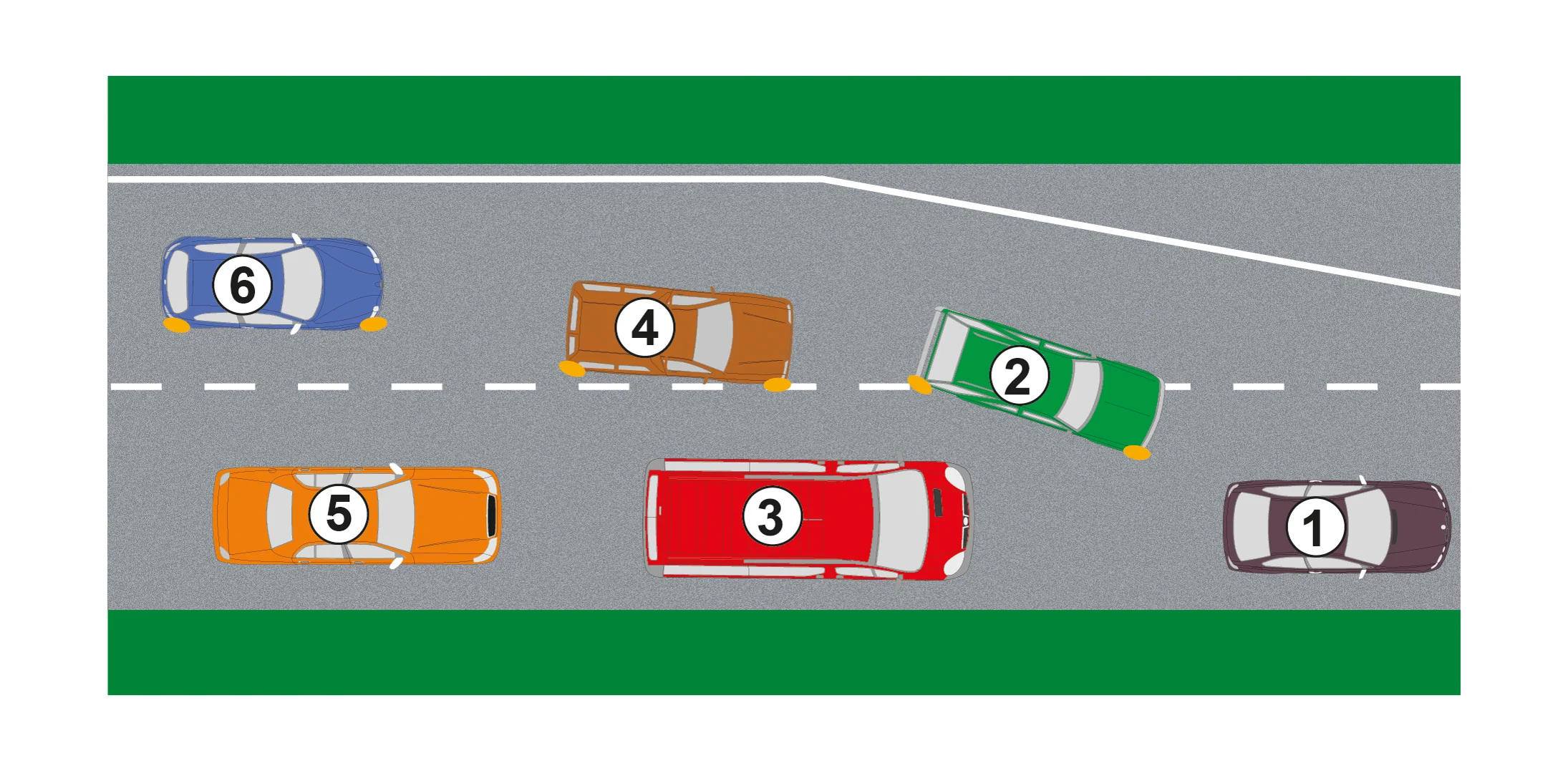
In conditions of a significant reduction in speed on the roadway, will the driver of vehicle 2 drive ahead of vehicle 3?
Show the correct answer
Correct answer
YES
Explanation
In the picture there is a roadway with two lanes in one direction, and the left lane ends; at the narrowing, the green vehicle no. 2 is moving over from the left lane, and in the right lane there is the red no. 3, with no. 1 in front of it. When there is a significant reduction in speed on the roadway, the driver of vehicle no. 2 drives ahead of vehicle no. 3. The answer is: yes.
The Road Traffic Act states that when there is a significant reduction in speed on a roadway with more than one lane in the same direction, and driving in a lane is not possible because of an obstacle or because the lane ends, the driver in the neighbouring lane must, directly before the point where the lane ends, allow one vehicle from that lane to move into the neighbouring lane. Vehicle no. 2 is exactly this "one vehicle": after no. 1 has gone through, it is next in the zipper merge, and no. 3 is required to let it in. The driver of no. 2 is not taking right of way by force - they are using a rule set by the Act, directly before the end of the lane, and they signal their intention with the indicator. The rule works only in a traffic jam; at normal speed, no. 2 would have to give way.
Legal basis: Art. 22 para. 4a of the Road Traffic Act (Prawo o ruchu drogowym)